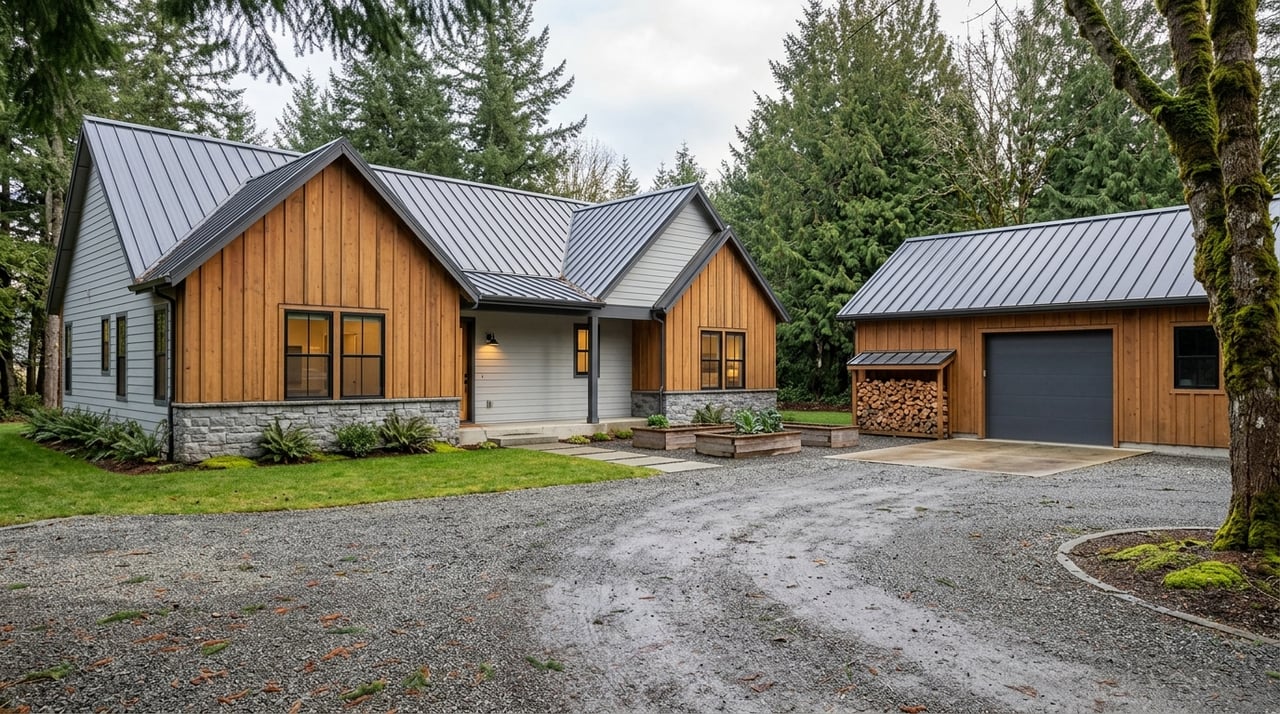
Dreaming about more land near Granite Falls? It is easy to picture the quiet, the trees, and the extra breathing room. But acreage living here is not just about getting a bigger lot. It is a different day-to-day experience that comes with more privacy, more flexibility, and more responsibility. If you are thinking about buying in the 98252 area, this guide will help you understand what acreage living really looks like so you can make a smart move. Let’s dive in.
Why Granite Falls Acreage Feels Different
Granite Falls has a rural foothills identity that feels different from many suburban parts of Snohomish County. The appeal is often a mix of space, privacy, and easy access to the outdoors.
That setting is not just a feeling. Snohomish County’s 2022 Census of Agriculture profile shows 1,418 farms and 73,324 acres in farms across the county, with an average farm size of 52 acres and 96% family farms. Livestock, poultry, and related products made up 54% of county agricultural sales, which helps explain why acreage properties in this area often feel practical as well as scenic.
For many buyers, that means acreage near Granite Falls is a lifestyle purchase first. You are often choosing room to spread out, a quieter setting, and proximity to recreation over quick errands and suburban convenience.
Outdoor Access Is Part of the Appeal
If you want a home base that puts you closer to trails and mountain-edge scenery, Granite Falls has strong appeal. Snohomish County lists Robe Canyon Historic Trail and Lime Kiln Trailhead in Granite Falls, and both Mount Pilchuck State Park and Wallace Falls State Park are nearby.
That outdoor access shapes how many people use and enjoy their property. A place with land can feel like an extension of the local lifestyle, whether that means gardening, storing gear, or simply having more room to enjoy the setting.
There is a practical side too. Mount Pilchuck’s access road closes in off-season winter months past Heather Lake Trailhead, and Wallace Falls parking is often full by late morning on weekends. In other words, living nearby gives you access, but local seasonality still matters.
What Acreage Can Actually Support
This is one of the biggest questions buyers ask, and the answer is simple: it depends on the parcel. Near Granite Falls, what you can do with acreage depends on zoning, setbacks, and county rules, not just the mailing address.
Snohomish County zoning includes a range of rural and resource categories, such as Agriculture-10 Acre, Suburban Agriculture-1 Acre, Rural Conservation, Rural Use, and several rural commercial and industrial designations. That means two properties that seem similar at first glance may allow very different uses.
If you are thinking about a shop, outbuildings, gardens, or animal keeping, parcel-level review matters. You do not want to assume a property fits your plans just because it has a few acres.
Home-Based Uses and Accessory Buildings
For buyers who want hobby space or a home-based work area, county rules are especially important. Snohomish County says a home occupation may be conducted in a dwelling, and in certain zones it may also be allowed in a residential accessory building or attached garage.
There is an important limit, though. The use must remain secondary to the home and comply with county standards. Also, these county rules apply only in unincorporated Snohomish County, not inside incorporated city limits, so confirming jurisdiction is a must.
Animals and Rural Living
Animal use is another area where Granite Falls acreage can line up with the local lifestyle, but only when the parcel allows it. Snohomish County Animal Services handles domesticated animals and livestock in unincorporated areas, and county animal laws cover issues like livestock at large and leash-law enforcement.
That tells you something important about this market. Animals are part of rural life here, but they are still regulated. If keeping animals is part of your goal, it is worth confirming the property’s zoning and use rules early.
The Big Utility Questions: Well and Septic
When you buy acreage near Granite Falls, utilities often look very different from what you may expect in more built-up areas. On many rural properties, water and wastewater need extra attention before you move forward.
Snohomish County says rural properties need an approved well and an on-site septic system approved by the Snohomish County Health Department for a residence or other building with plumbing. The county also requires permit applicants to prove an adequate potable water supply.
That means a parcel is not automatically build-ready just because other homes are nearby. Water feasibility has to be checked property by property, and permit-exempt wells are regulated differently by watershed.
Why Septic Review Matters
Septic is not a small detail in this market. Snohomish County says more than 78,000 homeowners rely on septic systems, and the county recommends updated inspections and record review.
For you as a buyer, that means septic records, inspection status, and system condition deserve real attention during due diligence. A beautiful property can still come with expensive questions if the septic system has not been properly maintained or documented.
Land Conditions Can Shape What You Can Do
Acreage often gives you more freedom, but it also brings more site-specific review. In Snohomish County, permitting resources call out critical area requirements, flood hazard areas, shoreline requirements, forest practices, and landslide hazard areas.
If a property is in a mapped flood hazard area, projects require a Flood Hazard Permit and an elevation certificate. That is why rural buyers need to think beyond the home itself and look carefully at the land.
This matters whether you plan to build, expand, clear space, or simply want confidence in the property’s long-term usability. A parcel-by-parcel review can help you avoid surprises after closing.
Burning and Land Clearing Are Not Free-For-Alls
A lot of buyers assume acreage means they can clear brush or burn yard debris whenever they want. In Snohomish County, that is not the case.
The county requires permits for residential burn piles. It also states that land-clearing burning is permanently prohibited in the county.
Burn bans may also come from the county fire marshal, Puget Sound Clean Air Agency, or Washington State Department of Natural Resources. If you are buying acreage with cleanup in mind, it helps to understand these rules upfront so your plans match what is actually allowed.
Commutes Are Possible, But Convenience Changes
One of the most common tradeoffs with acreage living near Granite Falls is convenience. You may gain privacy and space, but everyday travel can take more planning.
Community Transit Route 280 runs between Granite Falls Park & Ride and Everett Station. Everett Station connects to Sound Transit’s N Line to Seattle and Swift Blue Line service, and Sound Transit Route 532 runs between Everett and Bellevue.
So yes, transit options exist, but this is not a direct Granite Falls-to-Bellevue commute. If you work in Everett, Seattle, or Bellevue, the trip may be possible by transit, but it is multi-leg and schedule-dependent.
Roads and Travel Time Matter
Road conditions are part of the acreage equation too. WSDOT permanently lowered speed limits on SR 92 between the SR 9 interchange and Granite Falls city limits in 2026, and Snohomish County is replacing Granite Falls Bridge 102 north of downtown.
For buyers, the takeaway is straightforward. Commute times and road reliability may be more variable than expected, especially if you are moving from a more suburban area.
Weather Affects Daily Ownership
Western Washington weather is part of the charm, but it is also part of the work. Nearby Everett climate normals show average monthly highs ranging from 46.7°F in December to 75.7°F in August, with annual precipitation of 40.25 inches.
Late fall and winter are the wettest periods, while July and August are the driest. On acreage, that often means mud, drainage, and winter saturation are regular planning issues.
This is one reason a property can show very differently by season. A parcel that looks easy to manage on a sunny day in August may raise new questions during a wet November.
Who Granite Falls Acreage Fits Best
Acreage living near Granite Falls tends to fit buyers who want a more self-directed lifestyle. You may value privacy, outdoor access, space for projects, or simply a setting that feels more removed from suburban density.
It can be a great fit if you are comfortable with more maintenance and more upfront research. It may be a tougher fit if your top priorities are low upkeep, short errand runs, or highly predictable commute times.
The right property often comes down to matching the land to your goals. The best acreage purchase is not always the biggest parcel. It is the one that fits how you actually want to live.
If you are exploring acreage near Granite Falls, the smartest next step is to look beyond the listing photos and ask better parcel-specific questions. A local, detail-focused approach can make a big difference when wells, septic, zoning, road access, and land conditions all matter. If you want help sorting through what is practical and what is just marketing language, connect with Kyle Wells for clear guidance on Snohomish County acreage opportunities.
FAQs
What does acreage living near Granite Falls usually mean?
- It usually means more space, privacy, and access to outdoor recreation, along with added responsibilities like septic, well, drainage, and parcel-specific land review.
Can you keep animals on acreage near Granite Falls?
- Some properties may support animal keeping, but it depends on the parcel’s zoning, county rules, and whether the property is in unincorporated Snohomish County.
Do rural properties near Granite Falls need wells and septic systems?
- Many rural properties do, and Snohomish County says buyers and permit applicants need to verify approved septic systems and adequate potable water supply.
Can you build a shop or outbuilding on Granite Falls acreage?
- Possibly, but it depends on the property’s zoning, setbacks, and county regulations rather than the Granite Falls address alone.
Is commuting from Granite Falls acreage to Bellevue realistic?
- It can be possible, but transit is multi-leg and schedule-dependent, and road conditions can make travel times more variable than buyers expect.
What land risks should buyers check near Granite Falls?
- Buyers should review parcel-specific issues like flood hazard areas, landslide hazard areas, shoreline requirements, critical areas, and other county permitting constraints.