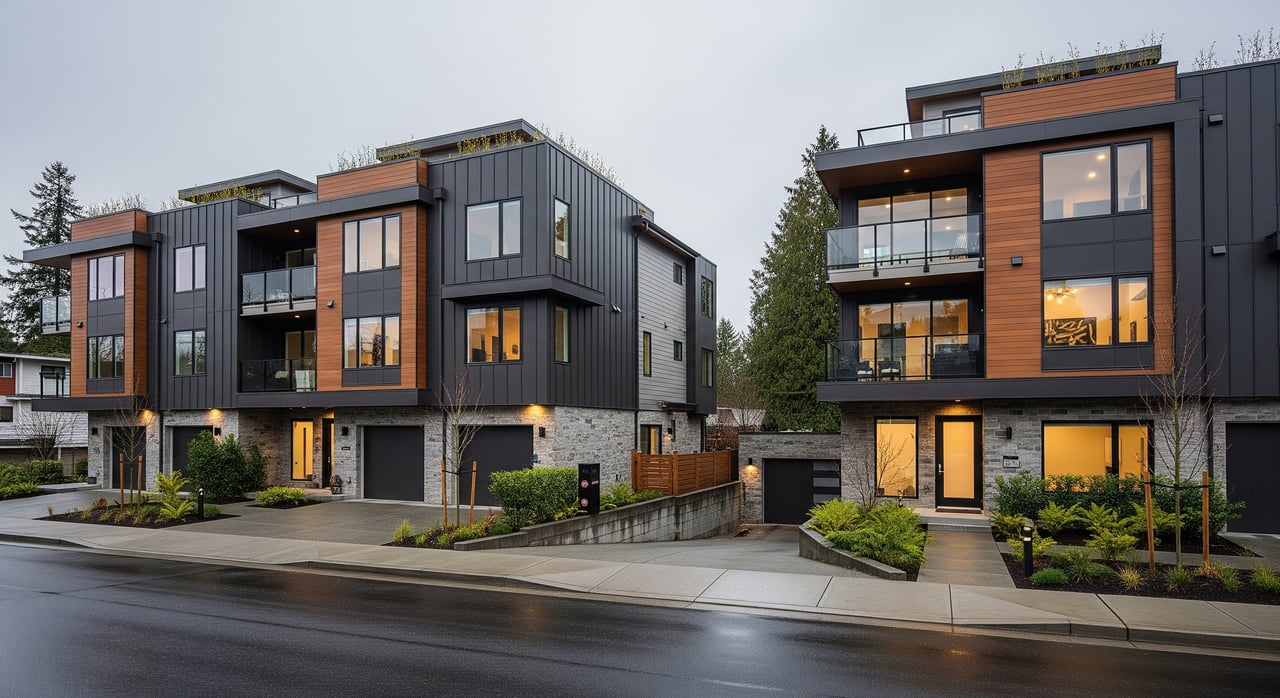
Trying to choose between a townhome and a condo in Lynnwood? You’re not alone. The terms get used loosely, and the differences matter for your budget, financing, maintenance, and resale. In this guide, you’ll learn how ownership works, what HOAs cover, how lenders view each property type, and what to look for in Lynnwood’s neighborhoods near transit and Alderwood. Let’s dive in.
Quick definitions that matter
A condominium is a legal form of ownership. You own the interior of your unit and share ownership of common elements like the roof, land, and hallways through the HOA. The condominium is created by recorded documents and governed by CC&Rs and bylaws.
A townhome is a building style. It is an attached home in a row, often with multiple levels. The legal ownership can be either fee-simple or condo-style. A fee-simple townhome means you own the lot and the structure like a single-family home, often with an HOA for shared areas. A condo-style townhome looks like a rowhouse but is legally a condominium.
The key takeaway: the label “townhome” does not guarantee fee-simple ownership. Always confirm the recorded legal structure before you make an offer.
What ownership changes for you
Ownership affects your deed, rights, and obligations. Fee-simple townhome owners receive a parcel deed and hold title to the land and building. Condo owners hold title to the unit airspace and an undivided share of common elements under the condominium declaration.
Taxes and assessments apply to both, based on assessed value. You will also pay HOA dues as applicable, which cover common costs in condos and often some shared costs in townhome communities.
Ownership form also influences lending, insurance, and resale. Lenders and insurers treat condominiums differently from fee-simple properties. That can affect your loan options, timelines, and monthly costs.
HOA responsibilities and maintenance
HOA rules and budgets vary by community. In Lynnwood, that variation is significant across City Center/Alderwood projects and fee-simple townhome pockets on the city’s edges. Read the CC&Rs, bylaws, and maintenance policy for each community before offering.
Typical condo coverage
- HOA often maintains exterior elements like roof, siding, landscaping, exterior paint, and common utilities.
- You typically insure interior improvements and contents with an HO-6 policy.
- Some buildings include portions of mechanical systems in common maintenance. Ask how central systems are handled and insured.
How townhome coverage varies
- Fee-simple townhomes can have limited HOAs that focus on landscaping and private roads. Others include roof and exterior.
- Condo-style townhomes will mirror condominium maintenance rules.
- Confirm in writing whether the owner or HOA handles roof, siding, decks, and fences.
Insurance details to confirm
- Master policy type: walls-out vs. all-in. This defines how much interior coverage your HO-6 policy needs.
- Deductibles and liability limits: large deductibles can result in special assessments if a claim is needed.
- Unit-owner responsibilities: understand where HOA coverage stops so you avoid gaps.
HOA finances and reserves
The HOA’s financial health is one of the biggest drivers of cost and resale value. Review:
- Current budget, reserve study, and financial statements.
- Reserve balance relative to upcoming capital needs like roof replacement and paving.
- History of special assessments and any planned assessments.
- Any pending litigation, especially construction defect cases.
PNW building and site issues to watch
- Roofs, gutters, deck flashings, and siding are common moisture-risk areas in our climate.
- Drainage and grading around units can lead to water intrusion if neglected.
- For condos, ask about any shared mechanicals and past leak history.
Financing and appraisal differences
Financing can be straightforward for fee-simple townhomes and more nuanced for condominiums. Start these conversations early in your search.
Loan programs in a snapshot
- Fee-simple townhomes often qualify for conventional, FHA, VA, USDA, and jumbo programs similar to detached homes, subject to borrower qualifications.
- Condos and condo-style townhomes may require project review or approval for FHA and conventional agency loans. If a project is not approved, you may need a different loan product or a larger down payment.
Lender concerns in condo projects
- Investor concentration and owner-occupancy ratios can trigger stricter underwriting.
- HOA financial health and dues delinquency rates matter.
- Pending litigation against the HOA can limit loan options or delay closing.
Appraisals and comps in Lynnwood
- Condo appraisals lean on comparable sales within the same project when possible. Limited recent sales can increase appraisal sensitivity.
- Fee-simple townhomes are compared to similar attached fee-simple sales. In areas with fewer direct comps, valuation can vary.
Down payment and reserves
- Some loan programs and lenders require higher down payments or cash reserves for condo purchases, depending on project eligibility.
- Mortgage insurance rules are similar, but overlays can be tighter for condos.
Steps to take before you offer
- Ask the listing agent or HOA about FHA, VA, and agency eligibility.
- Have your lender run a preliminary condo project check if you plan to use a program that requires approval.
- Build time into your offer for project review and HOA document evaluation.
Resale and monthly cost tradeoffs
Your monthly cost is more than just the mortgage. Compare apples to apples by looking at the full picture.
Total monthly comparison
- Condos: mortgage + taxes + HOA dues. Some dues include water, sewer, and trash, which can offset higher dues.
- Townhomes: mortgage + taxes + any HOA dues + owner-paid exterior maintenance if not covered by the HOA.
- Run scenarios with your lender so you see total monthly costs rather than just purchase price.
Rentability and buyer pools
- Rental caps, minimum lease terms, and application processes affect investor demand and resale reach.
- In transit-oriented areas, parking and storage options can heavily influence buyer interest.
Newer projects and turnover
- Newly built communities may have developer control of the HOA initially. Transition documents, warranty status, and early reserve planning can affect both costs and marketability.
Appreciation patterns
- Attached housing can appreciate differently than detached homes. Local supply, new development, and transit improvements can shift demand quickly.
- Project quality and management matter. Well-run HOAs with strong reserves tend to support steadier values and smoother sales.
Lynnwood location factors to weigh
Lynnwood’s growth, retail access, and transit improvements create strong demand for lower-maintenance homes. Weigh these local details as you compare options.
Transit and commute
- Proximity to the Lynnwood Link extension and local bus routes can boost demand for condos and townhomes near stations.
- Confirm walk and bike times to transit and review parking rules for commuters.
Submarkets within Lynnwood
- City Center and Alderwood: higher density, more attached housing options, and quick access to shopping and services.
- North Lynnwood and edges: more fee-simple townhomes and single-family pockets that feel more car-oriented.
- Border areas near South Snohomish and North King can vary in services and district lines. Verify boundaries for any property.
Schools and services
- Much of Lynnwood is served by Edmonds School District, with some areas falling into neighboring districts. Verify school assignments for a specific address as policies and lines can change.
Taxes and utilities
- Snohomish County property taxes and levies apply to both condos and townhomes.
- Some condo dues include water and sewer. Fee-simple townhome utilities are often owner-billed. Compare the full monthly picture.
Buyer checklist for Lynnwood shoppers
Review these items before you commit to a condo or townhome. These checks can save you from surprise costs and appraisal issues.
Documents to obtain
- CC&Rs, bylaws, and rules and regulations.
- HOA meeting minutes for the last 6 to 12 months.
- Current budget, reserve study, financial statements, and insurance declarations.
- Resale certificate or disclosure packet, plus any special assessment notices.
- Any litigation disclosures involving the HOA or developer.
Inspection and due diligence
- Hire a qualified inspector to review plumbing, electrical, decks, and potential water intrusion.
- For condos: ask about common mechanical systems and any leak history.
- For townhomes: verify property lines, yard drainage, and exterior maintenance responsibilities.
Questions for the HOA or manager
- What does the HOA cover and what do owners maintain?
- Are there recent or planned special assessments? Why and how much?
- What is the reserve funding level and date of the last reserve study?
- What are the pet, rental, and parking rules?
- Is the developer still in control, and are transition documents available?
Red flags to slow down
- Repeated or large special assessments without a clear long-term plan.
- Low reserves compared with upcoming capital needs like roofs or siding.
- Pending litigation that could limit financing or trigger assessments.
- High owner delinquency in HOA dues.
- Few recent comps within the community that could complicate appraisal.
Which is right for you
If you want lower exterior maintenance and a potentially lower entry price, a condo can fit well. Make sure you are comfortable with the HOA’s rules, dues, and reserves.
If you want more space, garage access, or a small yard, a townhome may suit you better. Fee-simple townhomes often offer simpler financing and more autonomy. Confirm whether your target townhome is fee-simple or condo-style.
In Lynnwood, your lifestyle, transit needs, and tolerance for HOA structures will guide your choice. Compare total monthly costs, not just sticker price, and study the HOA’s financials.
Ready to find the best fit and negotiate with confidence? Connect with Kyle Wells for local guidance, vetted lender introductions, and a clear plan from search to closing.
FAQs
What is the legal difference between a condo and a townhome in Washington
- A condo is a legal ownership form with shared common elements, while a townhome is a building style that can be fee-simple or condo-style; confirm the recorded documents.
How do HOA dues affect monthly costs in Lynnwood
- Compare condo dues plus mortgage and taxes against a townhome’s mortgage, taxes, any dues, and owner-paid exterior costs to see the true monthly difference.
Can I use FHA or VA to buy a Lynnwood condo
- Yes, if the condo project meets FHA or VA approval requirements; if not, you may need a different loan type or larger down payment.
What documents should I review before offering on a condo or townhome
- Get the CC&Rs, bylaws, rules, recent minutes, budget, reserve study, financials, insurance declarations, resale certificate, assessment notices, and any litigation disclosures.
Are townhomes always fee-simple in Lynnwood
- No; some townhomes are legally condominiums, so verify the recorded ownership structure before you write an offer.
How does light rail impact Lynnwood condo and townhome demand
- Proximity to the Lynnwood Link and major bus routes tends to support demand for low-maintenance homes near stations, which can influence resale and absorption.